
Technology / OmindTech Journal
Behind the Scenes: Advanced Technology Driving Forex, Crypto, and Stock Trading
Modern trading is not just about instinct; it's also backed by advanced technology. Let's explore the technology behind forex, crypto, and stock trading that makes it faster, more efficient, and more complex.

Unpacking the Technology Behind Trading: Forex, Crypto, and Stocks
Trading, be it forex, cryptocurrency, or stocks, has evolved dramatically in recent decades. Previously, trading decisions were often based on intuition and limited information. Now, thanks to technological advancements, traders have access to real-time data, in-depth analysis, and sophisticated platforms that enable them to make more informed and strategic decisions. In this article, we will delve into the technologies behind this modern trading.
In our experience at OmindTech, we see that understanding this technology is crucial for anyone who wants to succeed in the world of trading.
1. Trading Platforms: The Heart of Operations
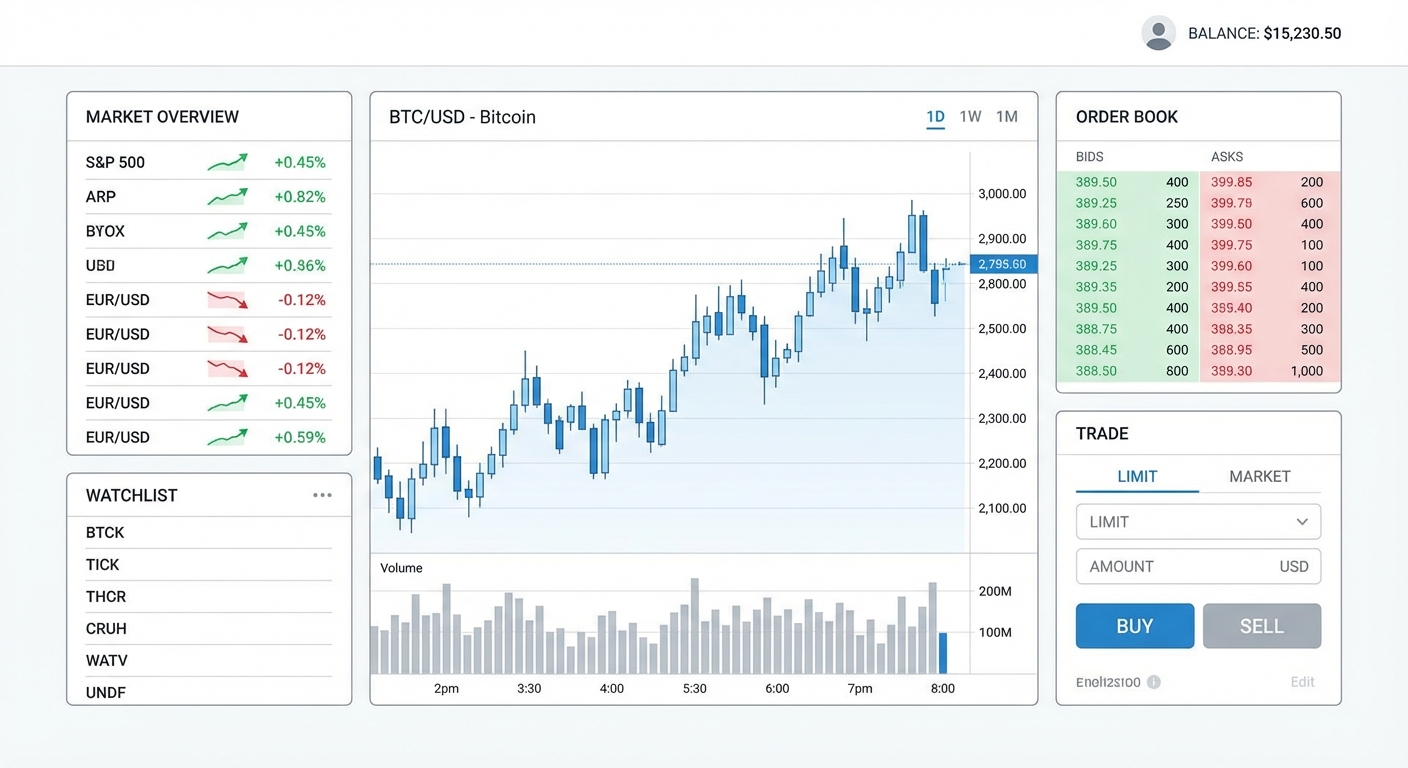
Trading platforms are the starting point for all trading activities. They provide an interface for traders to access markets, view prices, place orders, and monitor their portfolios. Modern trading platforms are far more than just tools for executing orders; they offer a variety of advanced features, including:
- Charting Tools: Interactive price charts with various technical indicators for analyzing price trends and patterns. Examples include Moving Average, RSI (Relative Strength Index), and MACD (Moving Average Convergence Divergence).
- Real-time Data Feeds: Accurate and fast real-time price data is crucial for making informed trading decisions. Trading platforms use direct connections to exchanges and data providers to ensure traders get the latest information.
- Order Management: The ability to place various types of orders, such as market orders, limit orders, stop-loss orders, and trailing stop orders, to manage risk and maximize profit.
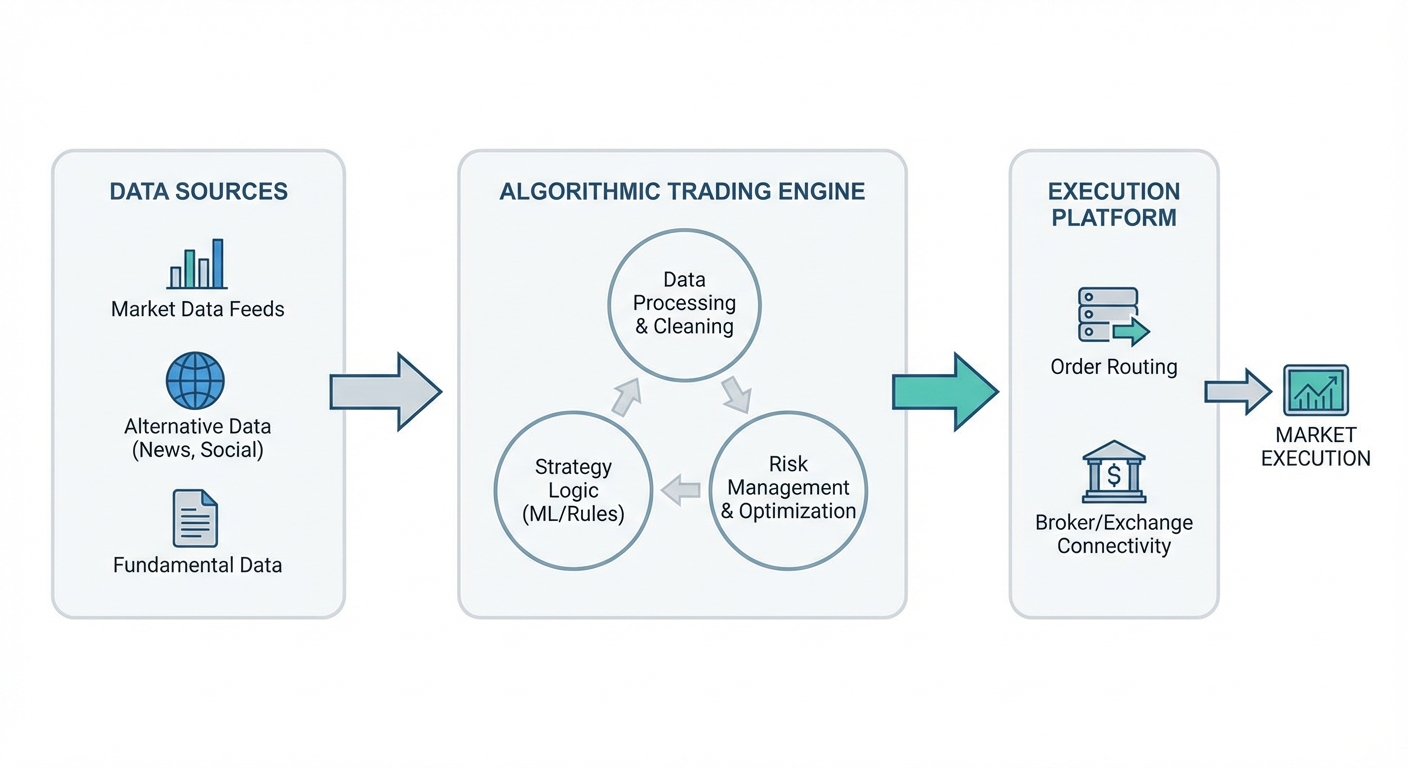
- Algorithmic Trading: Some platforms allow traders to create and run their own trading algorithms, which automatically execute orders based on predefined rules.
2. Trading Algorithms: High-Speed Automation
Trading algorithms, also known as algorithmic trading or automated trading, involve the use of computer programs to execute trading orders based on a predefined set of rules. Trading algorithms have become increasingly popular due to their ability to execute orders with much higher speed and accuracy than humans. Some benefits of trading algorithms include:
- Speed: Algorithms can execute orders in milliseconds, allowing traders to take advantage of fleeting market opportunities.
- Discipline: Algorithms eliminate emotion from the trading process, which can help traders avoid mistakes caused by fear or greed.
- Backtesting: Algorithms can be backtested on historical data to measure their performance and optimize trading strategies.
- Efficiency: Algorithms can monitor the market 24/7 and execute orders automatically, freeing traders from the need to constantly monitor screens.
Trading algorithms can range from simple, such as following a moving average, to highly complex, using machine learning and artificial intelligence to analyze data and predict price movements. In the cryptocurrency world, trading algorithms are often used to capitalize on arbitrage between various exchanges like Binance and others.
3. High-Frequency Trading (HFT): Extreme Speed
High-Frequency Trading (HFT) is a highly sophisticated form of algorithmic trading that uses high-speed computers and networks to execute orders in microseconds. HFT is often used by large trading firms and hedge funds to capitalize on small price differences across various exchanges. HFT is highly controversial, as some critics argue that it can exacerbate market volatility and give an unfair advantage to firms with access to the fastest technology.
4. Blockchain Technology in Cryptocurrency Trading
Of course, the most fundamental technology in cryptocurrency trading is blockchain itself. Blockchain is a decentralized digital ledger that records all cryptocurrency transactions. Some benefits of blockchain in cryptocurrency trading include:
- Transparency: All transactions are permanently recorded on the blockchain, making them transparent and auditable.
- Security: Blockchain uses cryptography to secure transactions, making them very difficult to hack or manipulate.
- Decentralization: Blockchain is not controlled by a single entity, making it more resistant to censorship and control.
In addition to blockchain, other technologies related to cryptocurrency trading include:
- Decentralized Exchanges (DEXs): Trading platforms that allow users to trade cryptocurrencies directly with each other, without intermediaries. DEXs use smart contracts to automate the trading process and ensure security.
- Wallets: Applications used to store, send, and receive cryptocurrencies. There are various types of wallets, including hardware wallets, software wallets, and paper wallets.
5. Cybersecurity: Protecting Digital Assets
Cybersecurity is a critical aspect of modern trading, especially in cryptocurrency trading. With the increasing value of digital assets, traders and exchanges have become increasingly attractive targets for hackers. Some common cybersecurity threats in trading include:
- Phishing: Attempts to trick traders into revealing their personal information, such as usernames, passwords, and cryptocurrency wallet private keys.
- Malware: Malicious software that can steal personal information or damage computer systems.
- DDoS (Distributed Denial of Service) Attacks: Attacks that flood exchange servers with traffic, making them inaccessible to traders.
To protect themselves from cybersecurity threats, traders should take preventive measures, such as:
- Using strong and unique passwords for each account.
- Enabling two-factor authentication (2FA).
- Being cautious of suspicious emails and messages.
- Keeping software up-to-date.
- Using hardware wallets to store large amounts of cryptocurrency.
6. Artificial Intelligence (AI) and Machine Learning (ML)
AI and ML are increasingly used in trading for various purposes, including:
- Sentiment Analysis: Analyzing news, social media, and other data to gauge market sentiment and predict price movements.
- Price Prediction: Using machine learning models to predict price movements based on historical data and other factors.
- Anomaly Detection: Identifying unusual patterns in market data that may indicate market manipulation or fraudulent activity.
- Portfolio Optimization: Using AI algorithms to optimize trading portfolios based on risk tolerance and investment goals.
7. Big Data Analytics
The amount of data available to traders continues to grow exponentially. Big data analytics allows traders to process and analyze large amounts of data to identify trends and trading opportunities that might otherwise be missed.
Conclusion
Technology has fundamentally transformed the world of trading. From sophisticated trading platforms to automated trading algorithms, technology enables traders to make more informed decisions, execute orders faster and more accurately, and manage risk more effectively. However, it's important to remember that technology is just a tool. Success in trading still depends on a deep understanding of the market, a solid trading strategy, and self-discipline. In our experience at OmindTech, combining fundamental understanding with the appropriate use of technology is key to achieving sustainable profitability in financial markets.
By understanding the underlying technology of trading, you can make more informed decisions and increase your chances of success in this dynamic financial market.
Join the conversation.
Read reader responses, ask a question, or share your experience.
Keep exploring.
All articles
Technology
Integrated Financial Apps: The Key to Business Scalability
Discover how integrated financial applications and custom accounting software can slash reconciliation times by 80% and drive limitless business growth.

Technology
Beyond Hype: 3 Tech Trends 2026 Reshaping Indonesian Business
2026 marks the shift from AI experimentation to real-world deployment. From Agentic AI to PDP-compliant data sovereignty, discover how business infrastructure in Indonesia is evolving from passive to autonomous.

Technology
Beyond New Computers: Digitalizing Schools for Indonesia 2045
Why is a stack of computers in a school lab never enough? We dissect the harsh reality of digital transformation in Indonesian education and how ecosystem-driven digitalization can foster world-class talents for Golden Indonesia 2045.
LET’S WORK TOGETHER
Start with your story.
One conversation can open up a new perspective. Tell us about your challenge.