
Technology / OmindTech Journal
Iran vs. America Tech War: Cyber Weapons, Drones, and the Future of Conflict
The conflict between Iran and the United States extends beyond conventional battlefields into the realm of technology. This article thoroughly explores the key technologies, from drones and missiles to cyber warfare capabilities, that play a role in this rivalry.

Iran vs. America Tech War: More Than Just Conventional Weapons
The rivalry between Iran and the United States is a complex narrative spanning several decades. Beyond ideological differences and geopolitical interests, this conflict now extends into the technological domain. In the modern era, military power is measured not only by the number of tanks or fighter jets but also by the ability to develop and leverage advanced technology. So, what key technologies are significant in the Iran-U.S. rivalry, and how do they influence the balance of power in the region?
Drones: Eyes and Hands in the Sky
One of the most prominent technologies in Iran's arsenal is drones, or unmanned aerial vehicles (UAVs). Iran has aggressively developed its drone capabilities, ranging from reconnaissance drones to armed drones capable of precision strikes.
- Reconnaissance Drones: Drones like the Shahed 129 are used for surveillance and intelligence gathering. These drones can fly for extended periods and transmit critical information back to command centers.
- Kamikaze Drones: Drones like the Shahed 136 are designed to destroy targets by crashing into them. These drones are relatively inexpensive to produce and can be used in swarm attacks to overwhelm enemy defenses.
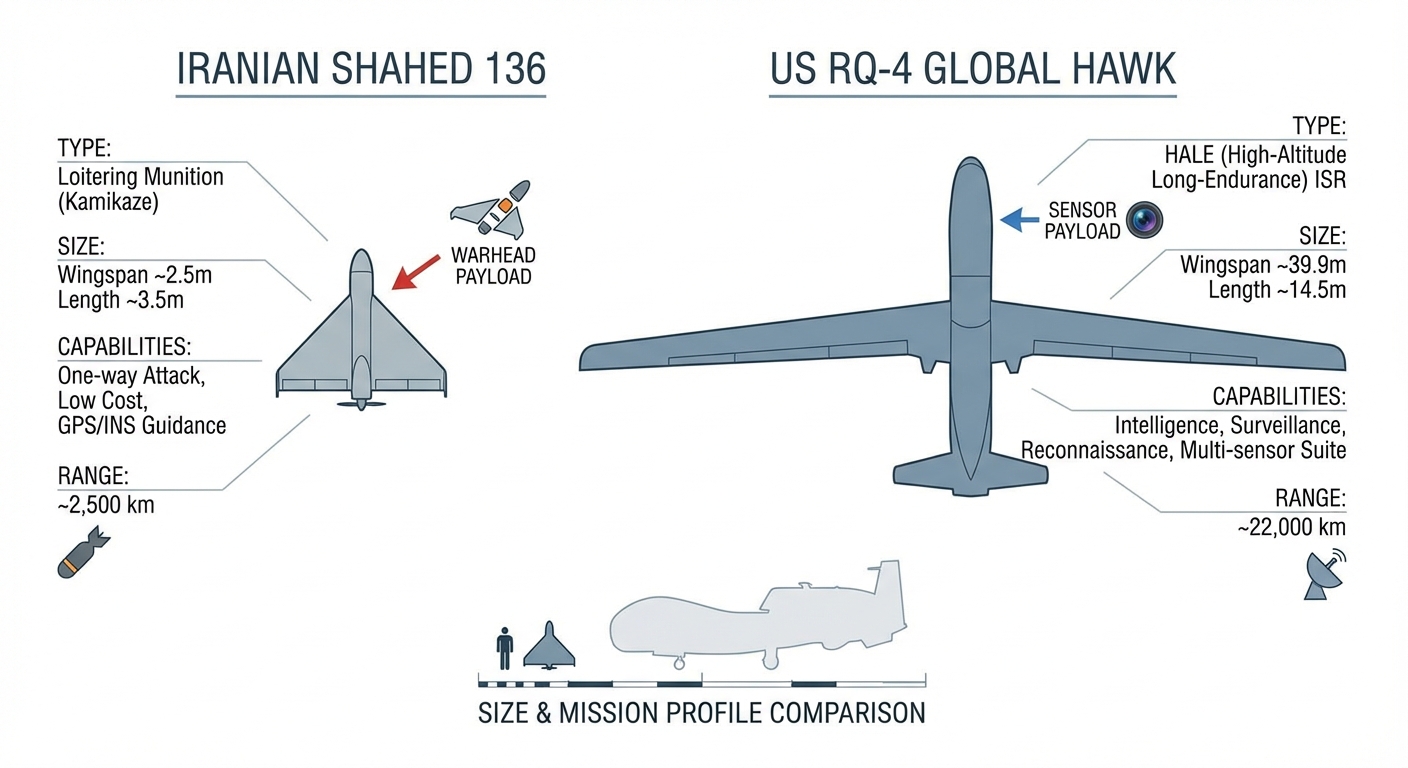
Iran's drone capabilities have become a major concern for the United States and its allies in the region. Drones can be used to attack oil tankers, military bases, and other critical infrastructure. The downing of a U.S. RQ-4 Global Hawk drone by Iran in 2019 is a clear example of how drones can alter conflict dynamics.
In our experience at OmindTech, the proliferation of drone technology is a game-changer in modern warfare. Drone provides a relatively inexpensive, adaptable platform that can be used for a variety of missions, from surveillance to strike, thus greatly augmenting force capabilities.
The United States, on the other hand, possesses far more advanced drone technology, such as the MQ-9 Reaper and RQ-4 Global Hawk. U.S. drones are equipped with superior sensors, longer flight endurance, and more lethal weaponry. However, the operational costs of U.S. drones are significantly higher than those of Iranian drones.
Missiles: Long-Range Power
Beyond drones, Iran also maintains a highly developed missile program. Iran has developed various types of missiles, ranging from short-range ballistic missiles to cruise missiles capable of reaching targets thousands of kilometers away.
- Ballistic Missiles: Missiles like the Shahab-3 can reach targets across the Middle East and even parts of Europe. These missiles are designed to carry conventional or nuclear warheads (though Iran denies having a nuclear weapons program).
- Cruise Missiles: Missiles like the Soumar are designed to fly low and evade enemy radar. These missiles can be used to strike targets with high precision.
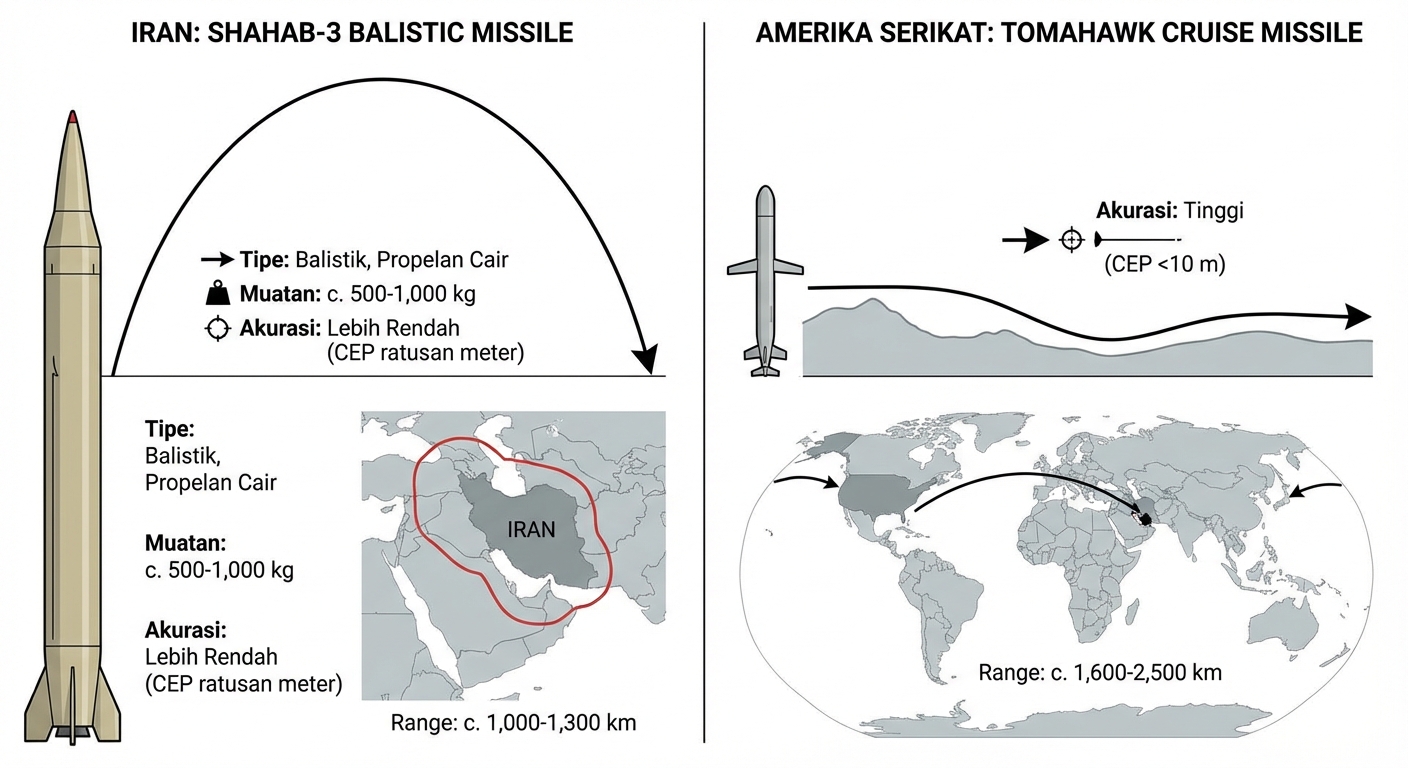
Iran's missile program is a source of concern for the United States and Israel. The United States has imposed sanctions on Iran to limit missile development. Israel, on the other hand, considers Iran's missile program an existential threat and has conducted airstrikes to destroy missile facilities in Syria and other countries.
Cyber Warfare: Battle in the Digital World
The conflict between Iran and the United States takes place not only in the physical world but also in cyberspace. Both nations possess sophisticated cyber warfare capabilities and have engaged in a series of cyberattacks against each other.
- Iranian Cyberattacks: Iran is accused of conducting cyberattacks against critical infrastructure in the United States, including power plants, transportation networks, and financial institutions. These attacks are designed to cause disruption and damage.
- U.S. Cyberattacks: The United States is accused of conducting cyberattacks against Iran's nuclear program. The Stuxnet attack, which damaged Iranian uranium enrichment centrifuges in 2010, is widely believed to have been carried out by the United States and Israel.
Iran's cyber warfare capabilities continue to evolve. Iran has formed specialized units responsible for conducting cyberattacks and protecting Iranian infrastructure from enemy cyberattacks. Cyber warfare allows Iran to strike enemies without deploying troops or launching missiles.
Air Defense Systems: Protecting Iran's Skies
Iran has heavily invested in air defense systems to protect its territory from aerial attacks. Iran's air defense system comprises various types of surface-to-air missiles (SAMs) and radars.
- Domestically Developed Air Defense Systems: Iran has developed its own air defense systems, such as the Bavar-373, which is claimed to rival Russia's S-300 air defense system.
- Imported Air Defense Systems: Iran has also imported air defense systems from Russia, such as the S-300, considered one of the world's most advanced air defense systems.
Iran's air defense systems are designed to detect and destroy aircraft, missiles, and drones entering Iranian airspace. The effectiveness of Iran's air defense systems remains debated, but their presence has forced the United States and its allies to exercise caution when conducting military operations near Iran.
Israel's Role in the Tech Conflict
Israel plays a significant role in the technological dynamics of the Iran-U.S. conflict. As a close ally of the United States and a bitter adversary of Iran, Israel is frequently involved in covert operations and intelligence sharing regarding Iranian technological developments. Israel possesses an advantage in cyber and surveillance technology, enabling it to monitor and counter Iranian activities in cyberspace. The Stuxnet attack, believed to be a joint U.S.-Israel operation, exemplifies how Israel leverages technological expertise to hinder Iran's nuclear program. Furthermore, Israel continues to develop advanced air defense systems like Iron Dome and Arrow, providing protection against missile attacks from Iran or its proxies. With rapid technological advancements, Israel is a key actor influencing the technological landscape of the Iran-U.S. conflict.
The Future of the Iran vs. America Tech War
The technological conflict between Iran and the United States is expected to continue in the future. Both nations will keep investing in the development of new technologies and enhancing their capabilities in cyber warfare, drones, and missiles. The future of this conflict will heavily depend on both countries' ability to adapt to new technologies and develop effective strategies to counter enemy threats.
- Artificial Intelligence (AI): AI will play an increasingly important role in future warfare. AI can be used to analyze intelligence data, control drones, and develop autonomous weapons.
- Quantum Computing: Quantum computing has the potential to revolutionize cryptography and cyber warfare. The nation that masters quantum computing technology will gain a significant advantage in cyber warfare.
- Space-Based Assets: Satellites will become increasingly important for surveillance, communication, and navigation. Nations with access to space will hold a significant advantage in warfare.
In our experience at OmindTech, the intersection of emerging technologies will heavily influence future conflict scenarios, requiring adaptability and strategic foresight to navigate the complex digital battlefield. The continuous advancement of technology requires constant vigilance and strategic adjustment. The victor in this technology war will be the nation that adapts most quickly and effectively leverages new technologies.
Join the conversation.
Read reader responses, ask a question, or share your experience.
Keep exploring.
All articles
Technology
Integrated Financial Apps: The Key to Business Scalability
Discover how integrated financial applications and custom accounting software can slash reconciliation times by 80% and drive limitless business growth.

Technology
Beyond Hype: 3 Tech Trends 2026 Reshaping Indonesian Business
2026 marks the shift from AI experimentation to real-world deployment. From Agentic AI to PDP-compliant data sovereignty, discover how business infrastructure in Indonesia is evolving from passive to autonomous.

Technology
Beyond New Computers: Digitalizing Schools for Indonesia 2045
Why is a stack of computers in a school lab never enough? We dissect the harsh reality of digital transformation in Indonesian education and how ecosystem-driven digitalization can foster world-class talents for Golden Indonesia 2045.
LET’S WORK TOGETHER
Start with your story.
One conversation can open up a new perspective. Tell us about your challenge.