
Technology / OmindTech Journal
Human Brain vs. Computer: Can Technology Compete?
The human brain and computers are two extraordinary information processing systems. This article thoroughly examines the fundamental differences and the future potential of technology to rival the brain's complexity.

Human Brain vs. Computer: Can Technology Compete?
The human brain, an astonishing organ, is the center of all our thoughts, emotions, and actions. Meanwhile, computers, products of artificial intelligence, have revolutionized nearly every aspect of our lives. The frequent question is: can computers rival the complexity and capabilities of the human brain? This article will thoroughly examine the comparison between the two, discussing how the brain works, computer limitations, and the future potential where technology might approach, or even surpass, human brain capabilities.
How Does the Human Brain Work?
The human brain is a complex network consisting of billions of neurons, or nerve cells, interconnected via synapses. Neurons communicate with each other through electrical and chemical signals, forming circuits that allow us to think, learn, feel, and act.
Brain Architecture
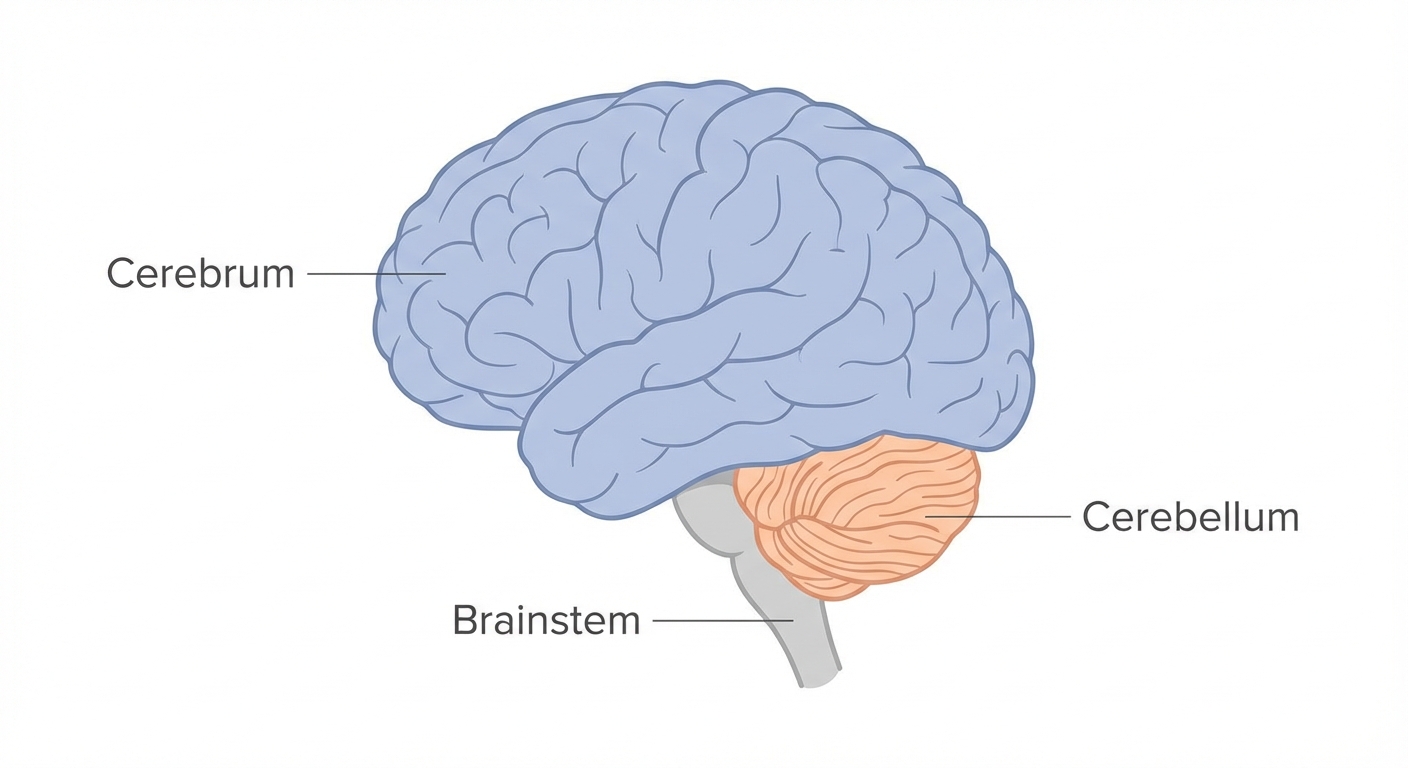
The brain can be divided into several main parts, each with specific functions:
- Cerebrum (Large Brain): The largest part of the brain, responsible for high-level cognitive functions such as language, memory, and reasoning. The cerebrum is divided into two hemispheres, left and right, each controlling the opposite side of the body.
- Cerebellum (Little Brain): Located at the back of the brain, the cerebellum plays a crucial role in coordinating movement, balance, and motor learning.
- Brainstem (Brain Stem): Connecting the brain to the spinal cord, the brainstem regulates vital functions such as breathing, heart rate, and blood pressure.
Information Processing
The brain processes information in parallel and distributed fashion. This means that many parts of the brain can work simultaneously to solve problems or perform tasks. Information is received through the senses, converted into electrical signals, and sent to various parts of the brain for processing. This process involves millions of synapses that constantly strengthen or weaken, depending on experience and learning.
"In our experience at OmindTech, understanding how the brain works is key to developing smarter and more adaptive technologies." - OmindTech.id Research Team
Brain Plasticity
One of the most amazing characteristics of the brain is its plasticity, which is the ability to change and adapt throughout life. Neurons can form new connections, strengthen existing ones, or even sever unused connections. Brain plasticity allows us to learn new things, recover from brain injuries, and adapt to changing environments.
How Do Computers Work?
Computers are machines that process information based on given instructions. Computers use bit, the smallest unit of information, represented as 0 or 1. This information is processed by the Central Processing Unit (CPU) according to the programmed instructions.
Computer Architecture
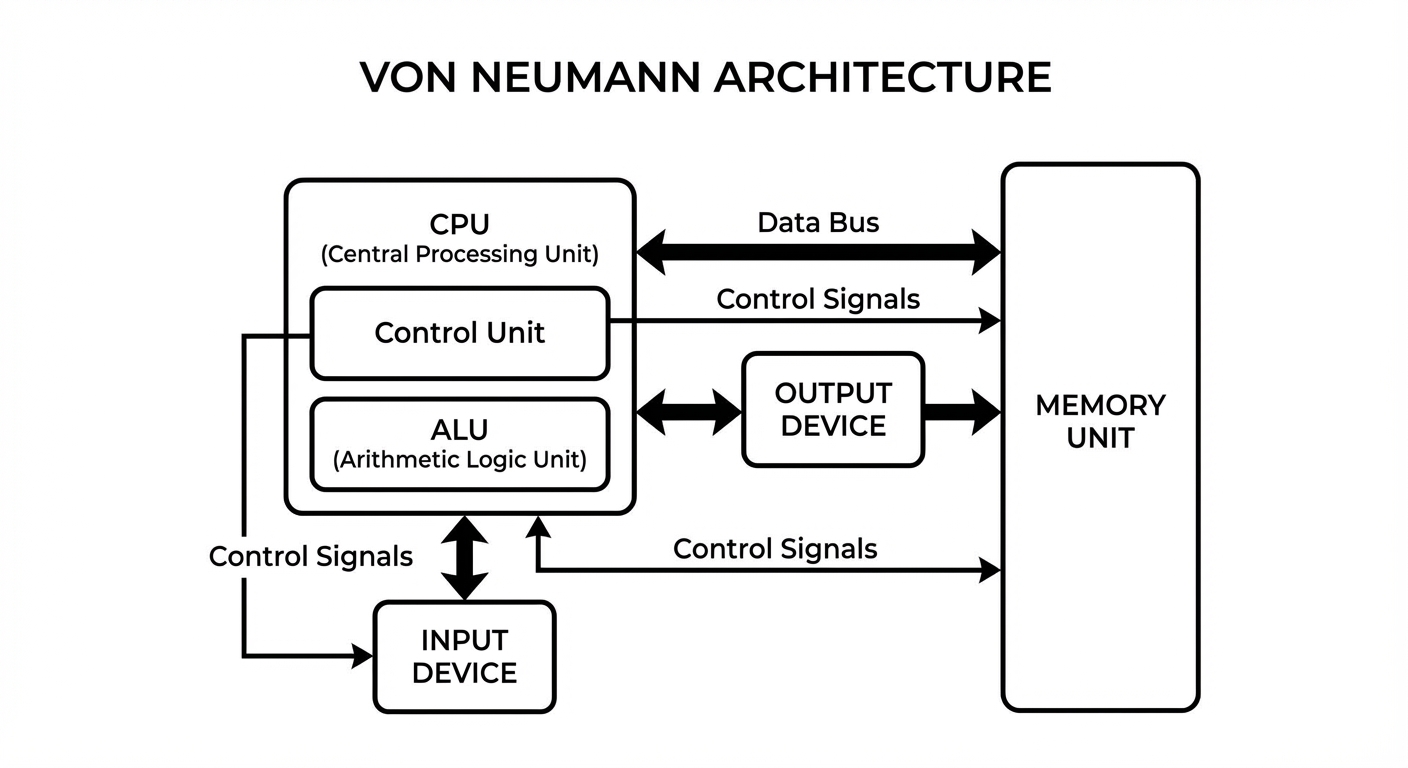
Modern computer architecture is generally based on the Von Neumann architecture, which consists of:
- Central Processing Unit (CPU): Performs arithmetic and logical operations, and controls data flow.
- Memory: Stores data and instructions required by the CPU.
- Input/Output (I/O): Enables the computer to communicate with the outside world.
Information Processing
Computers process information serially, step-by-step, according to the instructions provided by the program. Computer processing speed is measured in hertz (Hz), which indicates how many operations can be performed per second. The higher the clock speed, the faster the computer can process information.
Comparison with the Human Brain
| Feature | Human Brain | Computer |
|---|---|---|
| Architecture | Parallel and distributed | Serial (generally) |
| Processing Unit | Neurons | Transistors |
| Processing Speed | Slow (milliseconds) | Fast (nanoseconds) |
| Power Consumption | Low (around 20 watts) | High (tens to hundreds of watts) |
| Adaptation | High (brain plasticity) | Low (requires reprogramming) |
| Learning Capability | Natural (through experience) | Programmed (through algorithms) |
Computer Limitations
Although computers have achieved remarkable progress, there are several significant limitations:
- Limited Contextual Understanding: Computers struggle to understand the context and nuances of human language. They often interpret words literally, without considering implied meanings.
- Limited Creativity and Intuition: Computers lack the creativity and intuition possessed by humans. They cannot generate new ideas or solve complex problems without explicit programming.
- Limited Self-Awareness: Computers lack self-awareness or the ability to reflect on themselves. They do not know that they exist or have a purpose.
Future Potential: Can Computers Rival the Human Brain?
With rapid advancements in artificial intelligence (AI) and neurotechnology, the question of whether computers can rival the human brain is becoming increasingly relevant. Some promising research areas include:
Artificial Neural Networks (ANNs)
ANNs are computational models inspired by the structure and function of the human brain. ANNs consist of layers of interconnected artificial neurons, which learn by adjusting the strength of connections (weights) between neurons. Deep Learning, a branch of ANNs, has shown remarkable results in various applications, such as image recognition, natural language processing, and gaming.
Neuromorphic Computing
Neuromorphic computing is a new approach in computer design that seeks to more closely mimic the architecture and function of the human brain. Neuromorphic chips use analog and digital components to process information in parallel and energy-efficiently, like the human brain.
Brain-Computer Interfaces (BCIs)
BCIs are devices that enable direct communication between the brain and a computer. BCIs can be used to control external devices with thought, restore motor function in paralyzed individuals, and even enhance cognitive abilities.
Neurolink
Neurolink, a company founded by Elon Musk, is developing brain-implant BCIs aimed at treating neurological diseases and enhancing human capabilities. This technology has the potential to revolutionize how we interact with computers and the world around us.
Conclusion
Currently, computers are still far from being able to rival the complexity and capabilities of the human brain. However, with rapid advancements in AI, neuromorphic computing, and BCIs, we may see smarter and more adaptive technologies in the future. While computers may never fully replace the human brain, they can become incredibly powerful tools to enhance our abilities and solve complex problems.
"The future of technology lies in a closer integration between the human brain and computers." - OmindTech.id Analysis
Continuous research and development in these areas will bring us closer to understanding and utilizing the full potential of both these remarkable systems. We at OmindTech.id are very enthusiastic to continue following and participating in this journey.
Join the conversation.
Read reader responses, ask a question, or share your experience.
Keep exploring.
All articles
Technology
Integrated Financial Apps: The Key to Business Scalability
Discover how integrated financial applications and custom accounting software can slash reconciliation times by 80% and drive limitless business growth.

Technology
Beyond Hype: 3 Tech Trends 2026 Reshaping Indonesian Business
2026 marks the shift from AI experimentation to real-world deployment. From Agentic AI to PDP-compliant data sovereignty, discover how business infrastructure in Indonesia is evolving from passive to autonomous.

Technology
Beyond New Computers: Digitalizing Schools for Indonesia 2045
Why is a stack of computers in a school lab never enough? We dissect the harsh reality of digital transformation in Indonesian education and how ecosystem-driven digitalization can foster world-class talents for Golden Indonesia 2045.
LET’S WORK TOGETHER
Start with your story.
One conversation can open up a new perspective. Tell us about your challenge.