
Technology / OmindTech Journal
When Should a Business Start Thinking About Technology: A Complete Guide
Learn the right time for a business to start integrating technology for more efficient and competitive operations. Discover indicators and strategies for successful technology implementation.

When Should a Business Start Thinking About Technology: A Complete Guide
Technology is no longer just a complement, but a crucial foundation for business success in this digital era. A frequently asked question is: when should a business start thinking about how technology can leverage that business? This article will deeply discuss effective indicators, benefits, and technology implementation strategies.
Why Is Technology Important for Business?
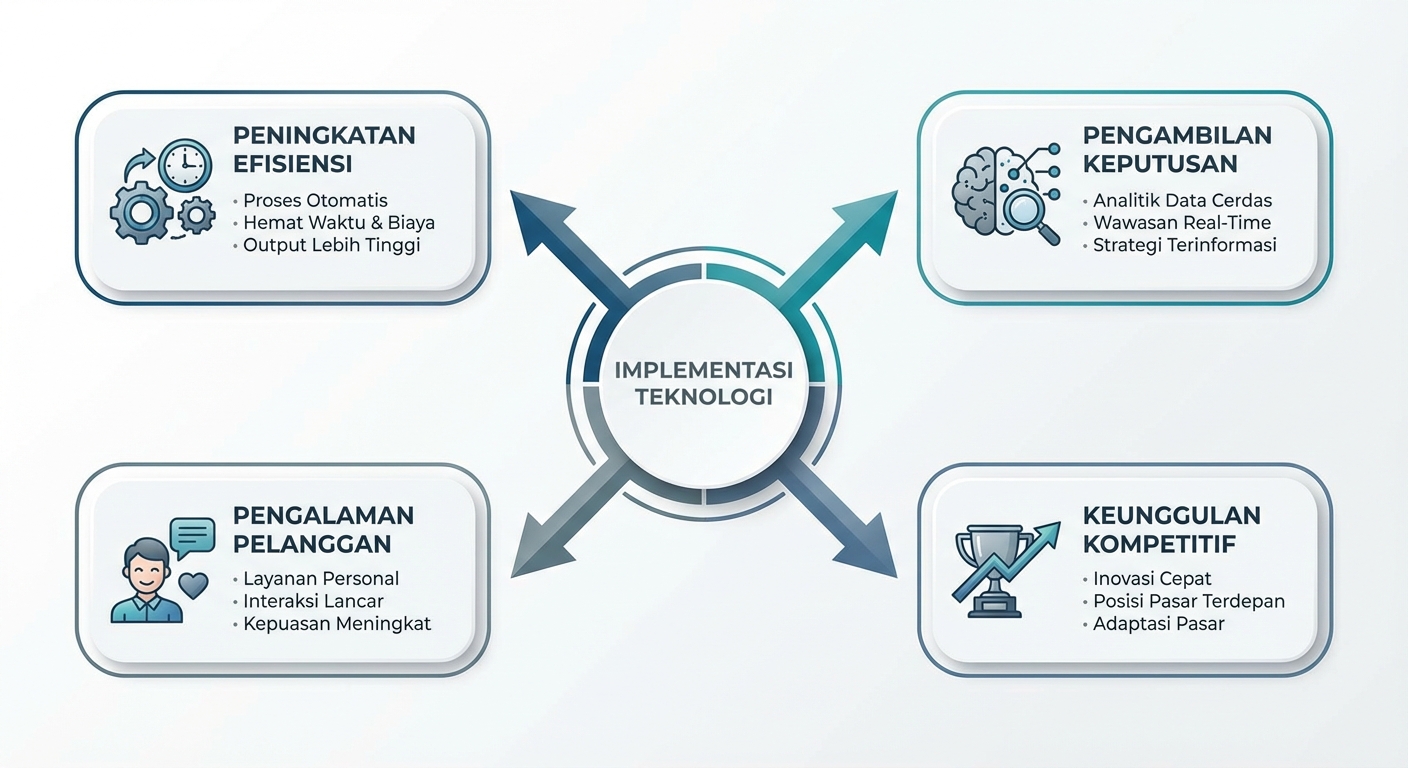
Before discussing when, let's understand why. Technology offers various advantages, including:
- Operational Efficiency: Business process automation reduces costs and increases productivity.
- Better Decision-Making: Accurate and real-time data enables more precise decision-making.
- Improved Customer Experience: Personalized and responsive customer service increases customer loyalty.
- Competitive Advantage: Technological innovation allows businesses to differentiate themselves from competitors.
- Scalability: Technology makes it easier for businesses to grow and expand without being limited by geographical or resource constraints.
Key Indicators: When Is It Time to Start?
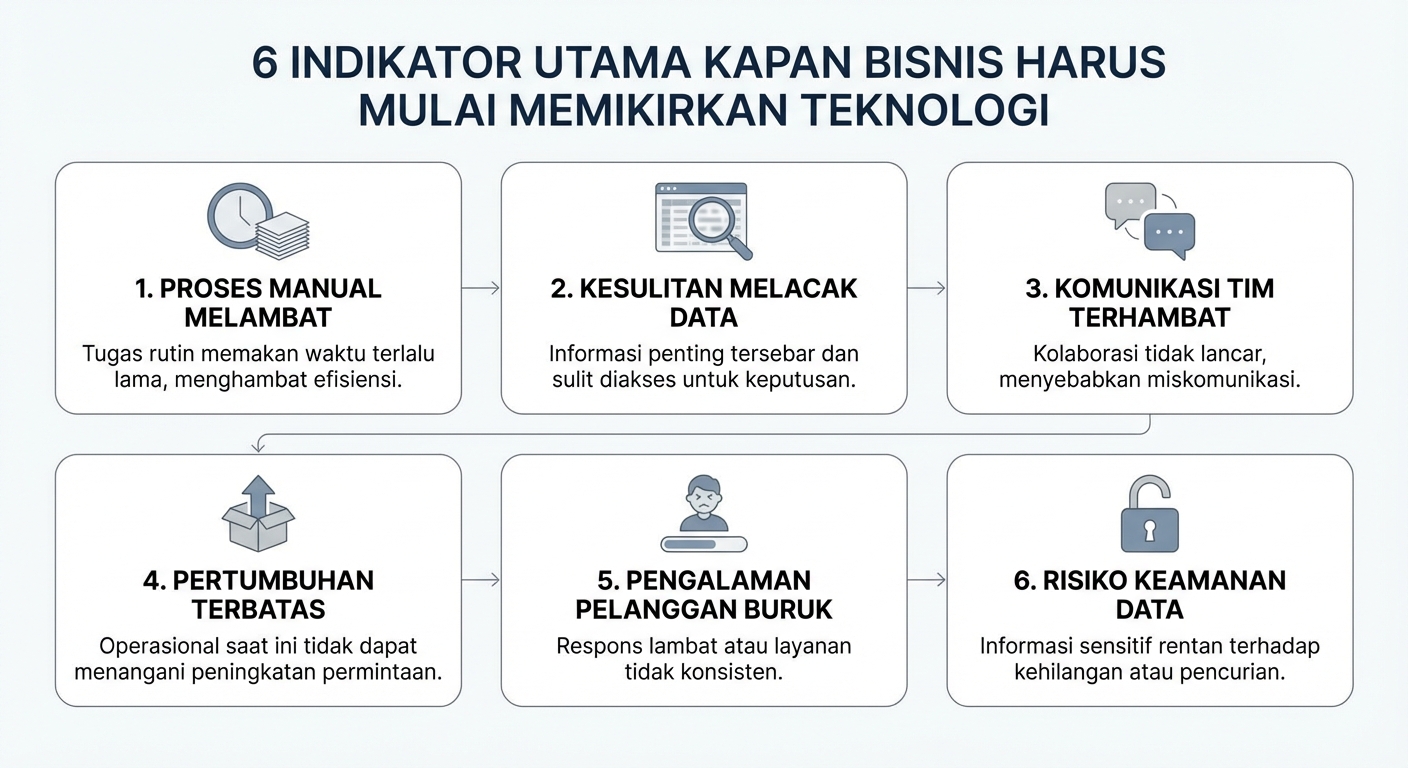
Here are some indicators that show it's time for your business to start seriously considering technology:
Stalled Growth: If your business growth is slowing or even stagnant, despite market demand, this could be a sign that your business processes are inefficient and require automation. For example, if you struggle to fulfill orders due to a manual inventory system.
Customer Churn: If you are experiencing an increased churn rate (rate of customer loss), this could be due to a poor customer experience. Technologies like CRM (Customer Relationship Management) can help you better understand and meet customer needs.
Difficulty Managing Data: If you struggle to collect, analyze, and leverage business data, this could be a sign that you need a more advanced system. ERP (Enterprise Resource Planning) solutions can help you integrate data from various departments and create informative reports.
Time-Consuming Manual Processes: If many of your business processes are still done manually, such as data entry, report generation, or inventory management, this wastes time and resources. Automation can free up your employees to focus on more strategic tasks.
Falling Behind Competitors: If your competitors are already using technology to improve efficiency and customer experience, you risk falling behind. It's important to continuously monitor technological developments in your industry and adapt.
Limited Scalability: If your business struggles to expand due to inadequate infrastructure, cloud technology can provide a flexible and scalable solution.
Types of Relevant Technologies for Business
There are various types of technologies that can be implemented by businesses, depending on their respective needs and goals. Some of the most common examples include:
- CRM (Customer Relationship Management): Helps you manage customer interactions, track leads, and improve customer service.
- ERP (Enterprise Resource Planning): Integrates various departments within your business, such as finance, HR, and inventory.
- Cloud Computing: Provides access to computing resources such as servers, storage, and software over the internet.
- Data Analytics: Helps you collect, analyze, and understand business data for better decision-making.
- Business Process Automation (BPA): Automates repetitive and manual tasks, such as data entry and report generation.
- E-commerce: Allows you to sell products or services online.
- Artificial Intelligence (AI) and Machine Learning (ML): Used for various applications, such as chatbots, personalization, and fraud detection.
Strategies for Successful Technology Implementation
Technology implementation is not always easy. Here are some tips to ensure successful implementation:
Define Clear Goals: What do you want to achieve with this technology? Clear goals will help you choose the right technology and measure implementation success.
Choose the Right Technology: Don't just choose technology that is trending. Consider your business needs and select the most suitable technology.
Plan Implementation Carefully: Create a detailed implementation plan, including timelines, budget, and required resources.
Involve Employees: Ensure your employees understand the benefits of the technology and are trained to use it effectively.
Measure and Evaluate: After implementation, measure and evaluate the results. Did the technology achieve your set goals? If not, make the necessary adjustments.
Start Small: Don't try to implement all technologies at once. Start with small, gradual projects.
In our experience at OmindTech, we have seen many businesses struggle with technology implementation because they didn't have a clear understanding of their needs and goals. It's crucial to start with a thorough assessment of your current processes and identify areas where technology can make a real difference.
Case Study:
For example, a retail business struggled to manage inventory and fulfill customer orders. After implementing an ERP system, they successfully reduced inventory costs by 20% and significantly increased customer satisfaction.
Conclusion
Deciding when a business should start thinking about technology is a crucial strategic decision. By understanding the right indicators, choosing relevant technology, and planning implementation carefully, you can improve efficiency, enhance customer experience, and achieve competitive advantage. Don't delay any longer, start planning your business's digital transformation now!
By considering all the above points, your business will be able to leverage technology optimally and achieve sustainable success.
Join the conversation.
Read reader responses, ask a question, or share your experience.
Keep exploring.
All articles
Technology
Integrated Financial Apps: The Key to Business Scalability
Discover how integrated financial applications and custom accounting software can slash reconciliation times by 80% and drive limitless business growth.

Technology
Beyond Hype: 3 Tech Trends 2026 Reshaping Indonesian Business
2026 marks the shift from AI experimentation to real-world deployment. From Agentic AI to PDP-compliant data sovereignty, discover how business infrastructure in Indonesia is evolving from passive to autonomous.

Technology
Beyond New Computers: Digitalizing Schools for Indonesia 2045
Why is a stack of computers in a school lab never enough? We dissect the harsh reality of digital transformation in Indonesian education and how ecosystem-driven digitalization can foster world-class talents for Golden Indonesia 2045.
LET’S WORK TOGETHER
Start with your story.
One conversation can open up a new perspective. Tell us about your challenge.