
Data Analysis / OmindTech Journal
Social Media in Marketing 5.0: Data Analysis & Ad Strategy
Marketing 5.0 bridges data intelligence with the human touch. This article analyzes how social media analytics and ad precision shape modern business landscapes.

Marketing strategies no longer rely on merely broadcasting a message as widely as possible. Global shifts in commerce have brought us into the paradigm of Marketing 5.0, a framework coined by Philip Kotler that describes the synergistic collaboration between human-mimicking technologies and genuine human-centric value creation. At the heart of this shift, social media has evolved from a simple public relations channel into an active data laboratory that directly dictates business conversion.
For our team at OmindTech, this evolution confirms that digital software and corporate infrastructure are not isolated islands. Modern social platforms generate billions of interaction touchpoints every second, recording real-time user preferences, operational complaints, consumption habits, and community sentiment.
Key Takeaways
- Convergence of Tech & Empathy: Marketing 5.0 requires advanced artificial intelligence and predictive modeling while maintaining contextual empathy and ethical customer relationships.
- Evolution of Precision Advertising: Social media ads have transitioned from generic broadcast media to context-aware delivery powered by real-time behavioral data.
- The Power of Integrated Architecture: Campaign success hinges on bridging social advertising touchpoints directly into core enterprise platforms like CRMs and ERP systems.
Foundations of Marketing 5.0 in the Social Media Sphere
Marketing 5.0 is built upon the structural progression of previous generations: product-centricity (1.0), consumer orientation (2.0), human-centricity (3.0), and the digital transition (4.0). Phase 5.0 operationalizes advanced technologies such as predictive analytics (using historical records to forecast future actions), contextual computing, and natural language processing to deliver personalized experiences at scale.
In social media environments, platforms like LinkedIn, Meta, and TikTok are far more than visual billboards. Their core algorithms dissect micro-behaviors: how many milliseconds a user pauses on an update, the specific discussions that trigger engagement, and the underlying tone of community responses. This data infrastructure allows organizations to detect underlying customer needs long before they are explicitly communicated.
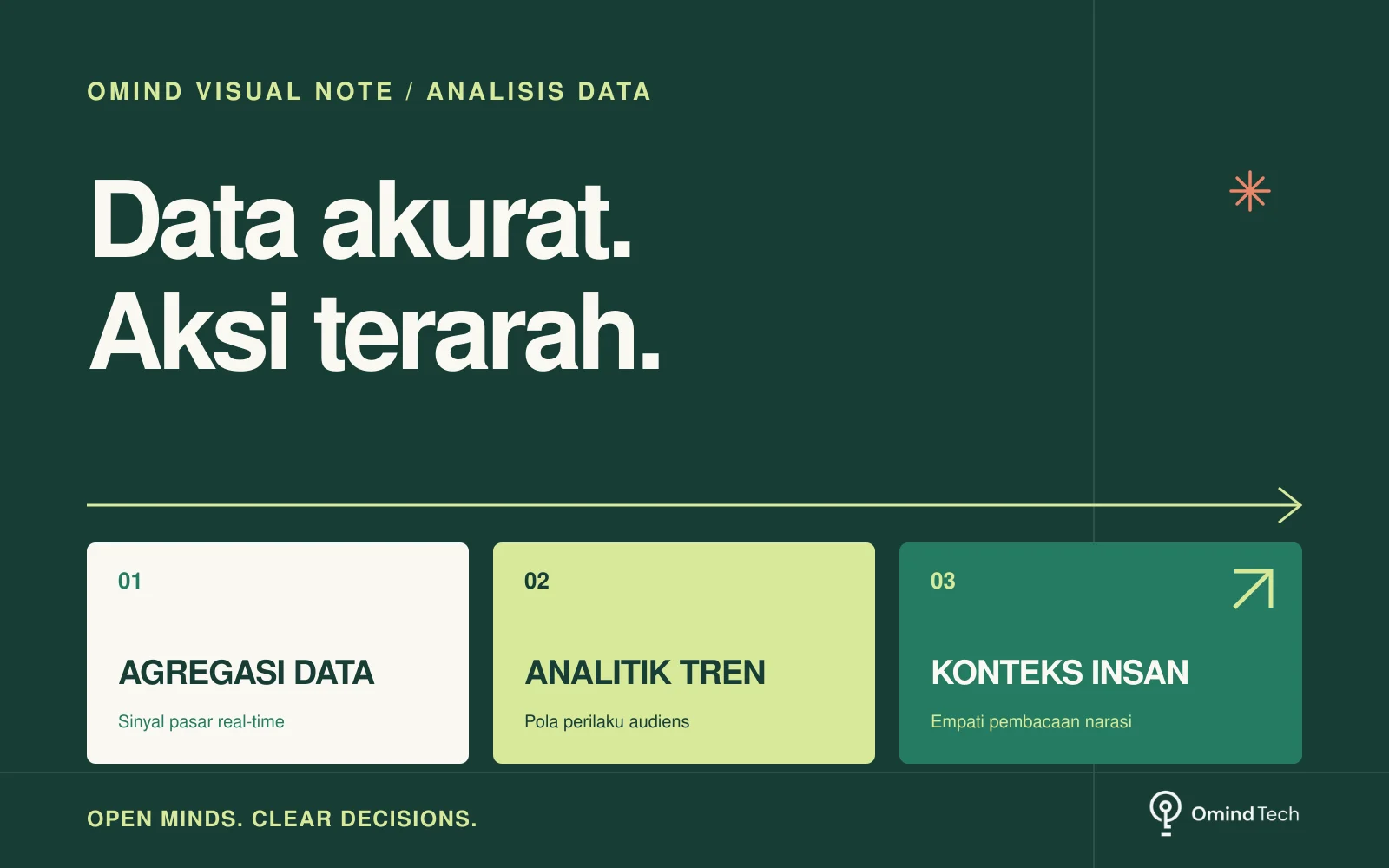
Decoding Social Media Data: Patterns, Algorithms, and Engagement
To optimize marketing investments, business leaders must distinguish between vanity metrics and substantive transactional signals. Surface figures like follower counts or raw page impressions provide little assurance of sustainable revenue unless mapped against a rigorous conversion funnel.
Three analytical dimensions form the pillar of data-backed social strategy:
- Contextual Sentiment Analysis: Utilizing machine-assisted classifiers to evaluate how target audiences respond to a product launch, identifying whether feedback is constructive, neutral, or highlighting operational friction.
- Touchpoint Attribution Modeling: Verifying which specific social touchpoints actually influenced an application download, contract inquiry, or final purchase.
- Predictive Behavioral Modeling: Leveraging historical campaign data to forecast optimal ad spending allocations across distinct audience demographics.
Social media algorithms are not arbitrary; they are engineered to reward content and advertisements that generate high-quality behavioral signals. Consequently, marketing effectiveness correlates directly with an organization's capacity to aggregate and analyze these data signals consistently.
Ad Format Transformation: From Mass Broadcast to Contextual Precision
Social advertising has moved far beyond static creative banners matched with broad demographic parameters. Under Marketing 5.0 principles, an ad serves as an agile mechanism that recalibrates based on real-time consumer intent.
Dynamic Personalization Driven by Intent Signals
Modern ad architectures leverage Dynamic Creative Optimization. When a prospective buyer shows interest in supply chain tracking, the advertising engine automatically populates ad units emphasizing real-time logistics analytics rather than broad corporate slogans. Conversion rates climb because solutions surface during moments of heightened relevance, not through intrusive repetition.
Mitigating Ad Fatigue
Uncalibrated ad delivery damages brand equity and drives audience fatigue. With precise analytics in place, delivery engines can enforce frequency caps, exclude prospects who have already converted, and gracefully route users into subsequent stages of their customer journey.
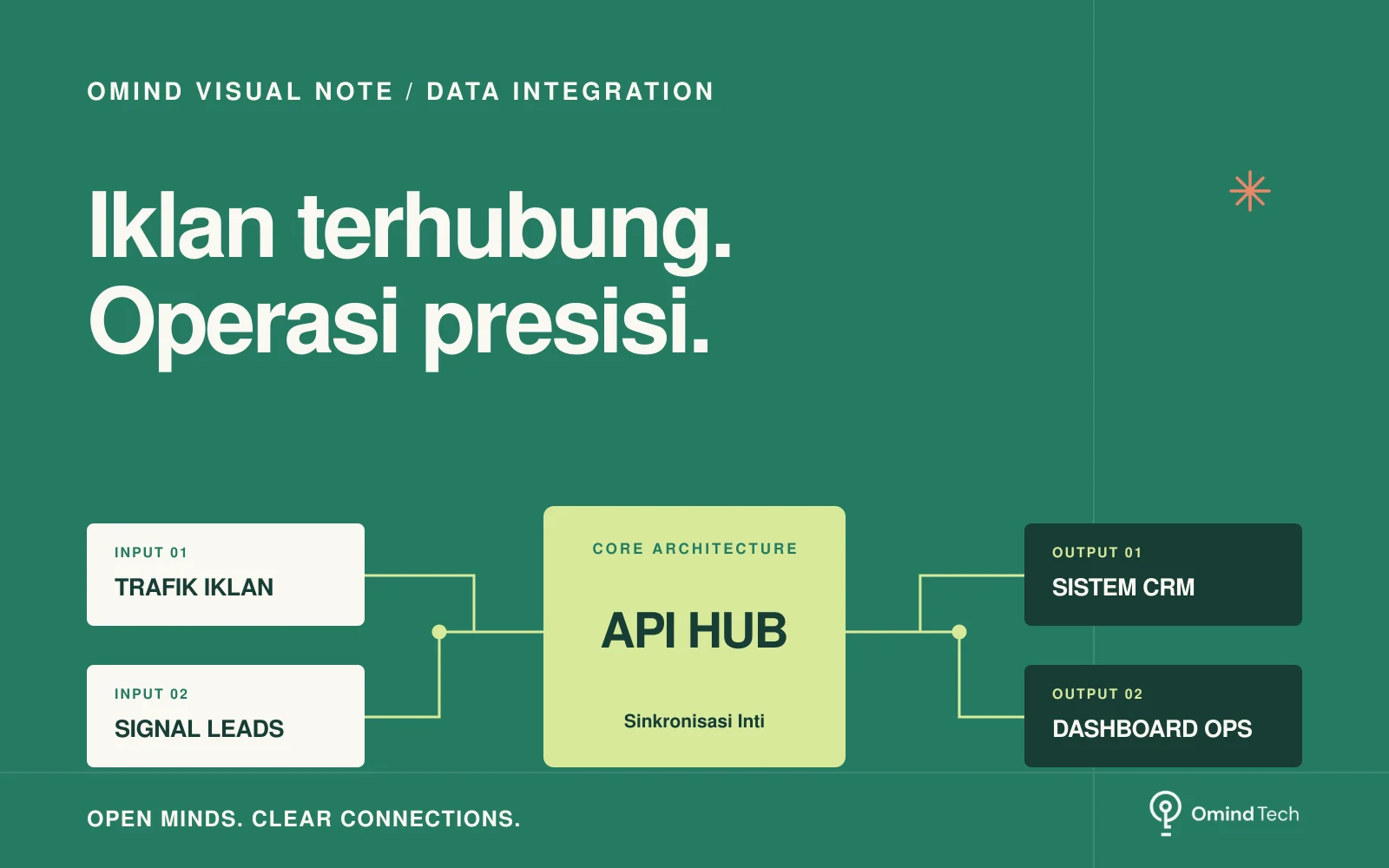
The Role of System Integration: OmindTech's Approach
At OmindTech, we frequently observe companies struggling with the same fundamental friction: their social media data and ad campaign outputs remain locked in disjointed silos, detached from core operational software. An ad manager dashboard may display dozens of inbound leads, yet internal sales teams fail to respond promptly because information must be transferred manually between disparate applications.
Through our Listen, Understand, Solve framework, we dismantle these operational bottlenecks by integrating front-end digital touchpoints directly into enterprise architectures, including custom CRMs, ERPs, and internal databases:
- Listen: We audit how prospect data moves from external advertising interfaces into internal transactional databases.
- Understand: We identify root causes of data latency, uncoordinated inventory tracking, or fragmented lead accountability.
- Solve: We engineer and configure secure APIs (Application Programming Interfaces—software connectors bridging different platforms) that pipe incoming inquiries straight into internal operational queues.
This end-to-end integration ensures that every unit of capital invested in social advertising can be evaluated against actual customer lifetime value and bottom-line operational performance.
Actionable Recommendations for Modern Organizations
Mastering social media dynamics in the Marketing 5.0 era demands both technical discipline and operational agility. Here are concrete steps to implement:
- Audit Data Flows and Eliminate Silos: Determine whether your social campaign telemetry can be visualized alongside internal customer conversion records in a unified view.
- Rethink Performance Indicators: Transition away from vanity figures. Prioritize Customer Acquisition Cost (CAC) and Customer Lifetime Value (CLV) grouped by social media acquisition source.
- Automate Pipeline Ingestion: Configure automated routing so that high-intent inquiries from social ads enter your sales workflows immediately, bypassing manual exports.
- Pair Algorithmic Precision with Empathy: Rely on data insights to understand customer pain points, then communicate your value proposition using clear, honest, and transparent language.
Data analytics and ad algorithms offer unprecedented targeting precision, but lasting commercial resilience ultimately depends on your underlying business systems' ability to fulfill promises rapidly and reliably.
Join the conversation.
Read reader responses, ask a question, or share your experience.
Keep exploring.
All articles
Data Analysis
How TikTok Outperformed Instagram: A Deep Strategic Analysis
An in-depth analysis of how TikTok disrupted Instagram's dominance through its cutting-edge Interest Graph algorithm, content authenticity, and revolutionary social commerce penetration.

Data Analytics
France VS Spain World Cup 2026 Prediction: Tactical Analysis
An in-depth analysis of tactics, head-to-head history, squad strength, and data-driven predictions for France vs Spain in the 2026 World Cup.

Technology
Software Houses in the AI Era: Relevant or Replaced?
Amidst the deafening roar of the AI revolution, a crucial question arises: will the role of software houses be eroded? At OmindTech, we understand this concern. This article will guide you through how artificial intelligence, far from being a threat, is actually opening a new chapter for software houses, allowing them to transform into indispensable strategic partners. Let's dive deeper into this shift and uncover the true value that human expertise firmly holds amidst a sea of AI-generated code.
LET’S WORK TOGETHER
Start with your story.
One conversation can open up a new perspective. Tell us about your challenge.